Office & Organization / PRODUCT GUIDE
Amazon Basics wide-ruled notepads: working notes you can tear off
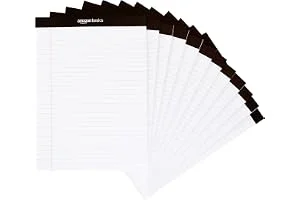
Amazon Basics B00QSR9URI is the white 12-pack of 50-sheet, wide-ruled writing pads. Its appeal is a large supply of removable working paper for calls, project lists and handwritten drafts. Choose it for notes that move between people or files; a bound notebook makes more sense when keeping the sequence intact matters.
As an Amazon Associate I earn from qualifying purchases.
Count pads and sheets before comparing the price
This exact pack contains twelve pads with fifty sheets each, or 600 sheets in total. That is useful when several workstations need their own pad, or when you keep separate pads for unrelated projects. It can also be much more paper than one occasional note taker needs. Compare the delivered price per pad and per sheet against the quantity you will actually use, rather than judging a bulk pack by its headline price alone. A sheet is a physical piece of paper; do not double the advertised quantity by treating its two sides as additional sheets. No current price or savings claim is assumed here.
The overall pad is taller than a letter-size sheet
The reproduced supplier specification gives 8.5 by 11.75 inches including the top binding and describes the removable paper as letter size. This is not an 8.5-by-14-inch legal-size pad. That distinction matters when choosing a folio, desk tray or clipboard: allow room for the whole bound pad, not just a loose letter sheet. The listed chipboard back provides support, but it does not turn a flexible pad into a rigid writing desk. For standing notes on location, check the fit in your existing clipboard. A dedicated writing surface can matter more than buying a larger quantity of pads.
Wide ruling favors readable working notes over dense records
The listed line spacing is 11/32 inch. That gives larger handwriting room, but it also uses more vertical space than narrow ruling for the same number of written lines. A useful production workflow is to put one interview or shooting location on each sheet, with a heading at the top and check marks beside completed items. Keep detailed scripts elsewhere; the pad works better as a short working brief than as a substitute for a carefully formatted document. The printed margin can separate actions from supporting notes. These are suggested uses based on the layout, not a report of Ryan using this particular pack.
Perforation helps handoffs but makes filing your responsibility
The perforated top is intended to let you remove individual sheets. That suits a phone message you hand to someone else or a project list you put beside the equipment it concerns. Once a sheet is detached, however, the pad no longer keeps it in order. Date the page and add a project name before separating it, then file or digitize the notes you need to retain. A loose collection of unmarked sheets is harder to reconstruct than a bound chronology. Ryan has not tested tear quality, ink bleed-through or erasing on these pads, so this guide does not promise clean removal or compatibility with every pen.
Compare PAPERAGE when notes should stay together
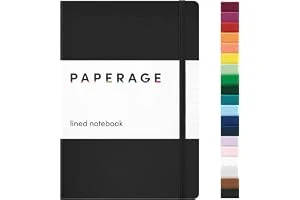
The linked black PAPERAGE B07L4JCG7T journal is the medium hardcover format, approximately 5.6 by 8 inches, with 160 lined pages. PAPERAGE documents 100 gsm paper, an elastic closure and a ribbon marker for this notebook family. Its smaller footprint and bound format suit an ongoing meeting record or a personal project journal that travels in a bag. The tradeoff is less room per page and a format less convenient for handing an entire sheet to someone else. Its 160-page specification is not directly equivalent to 160 loose sheets. Choose the journal for continuity; choose the pads when separating and distributing notes is part of the job.
Compare index cards when each idea needs to move independently
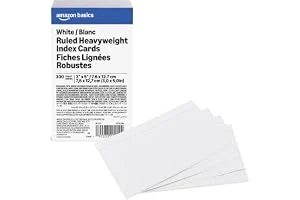
Amazon Basics B077K8JVW4 is a 300-count pack of white, heavyweight 3-by-5-inch index cards, ruled on one side. Cards are a useful alternative for interview prompts, flashcards or arranging individual scene ideas across a table. You can reorder a sequence without rewriting the whole list, while a full notepad sheet gives much more space for connected notes. The small card format becomes frustrating for long explanations, and loose cards need a box, clip or another organizing method. Choose the writing pads for full-page working notes, the PAPERAGE journal for a retained record, and index cards for brief items that benefit from being shuffled or sorted.
Compare the shopping options
PAPERAGE hardcover journal — keep a continuous record
Amazon Basics 3×5 index cards — rearrange individual ideas
Sources and review basis
Researched November 21, 2026. Ryan’s own experience is attributed where supplied. Other judgments are buying advice based on the cited product information, not a hands-on comparison or laboratory test. Prices and availability are checked at the retailer.