Tools & Home Improvement / PRODUCT GUIDE
Franklin ProSensor M210 guide: a wider view for planning wall-mounted projects
The M210 is most interesting when you want to see the apparent width of framing while laying out a shelf or mounting rail. Its 13-sensor array and 21-light display offer more information at once than a single edge indicator, but interpreting that information remains part of the job.
As an Amazon Associate I earn from qualifying purchases.
Use the display to plan before you mark holes
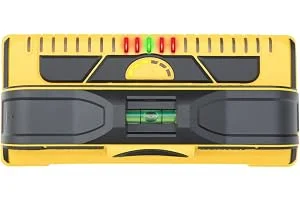
Franklin lists 13 sensors, 21 LEDs and detection up to 1.7 inches for this model. The display is intended to show the full width of a detected object. For a long mounting rail, sketch the proposed position first, then compare the available framing locations with the rail’s permitted fixing positions. That separates the visual layout from the fastening decision. Finding a broad illuminated region does not mean every point in that region is an acceptable anchor location or that the wall can support a particular load.
Choose the larger tool for repeated layout work
The built-in bubble level and pencil caddy keep two useful layout aids with the scanner. That is convenient when moving between several brackets and repeatedly putting the tool down to mark positions. A separate longer level can still be more useful for checking alignment across the whole shelf. The M210 makes the most sense when you value its display and integrated aids often enough to carry the larger tool. Buying it for a single small picture may offer little benefit over a simpler finder and the measuring tools you already own.
Treat the live-wire meter as a warning system
The manual describes a meter whose lights increase with detected electrical strength. It can miss wires and does not establish that a wall is safe to penetrate. Franklin instructs users to shut off electricity, gas and water before drilling or penetrating the surface. Separately, the stud LEDs detect density changes, not object identity. A pipe can produce a reading too. This distinction matters more than the number of sensors: when the location or construction remains uncertain, investigate it rather than treating the display as permission to drill.
Match expectations to the wall and the operating method
Use two AA batteries, hold the tool by its handle and keep the button pressed during the scan. The manual limits expectations through variable plaster, metal mesh, tile and exterior materials. A 1.7-inch headline is not a guarantee across every wall assembly. For a recurring installation task, keep notes about the wall construction and compare repeat scans before deciding where the layout will go. Ryan has not checked this model against opened walls or measured its detection accuracy; this is an assessment of the documented features and workflow.
Compare M150 when a smaller display covers the task
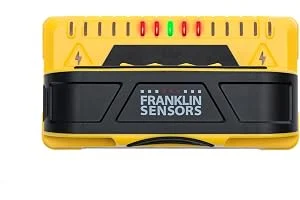
The M150 B0917TH83L uses nine sensors and 15 LEDs with a stated 1.5-inch depth. It retains the full-width display approach and an electrical warning, making it the closer alternative for ordinary household layout. Choose the M210 when its wider display, bubble level and pencil storage are useful parts of your routine. Choose the M150 when you want the multi-light approach without paying for features you rarely reach for. Neither choice resolves unknown construction simply by increasing the number of lights.
Compare Craftsman when you prefer marking the two edges
The Craftsman CMHT77633 B07QJD6VLL is an edge-finding tool with a stated three-quarter-inch drywall range. Its workflow identifies each edge from opposite directions, after which you mark the midpoint. It is worth comparing for occasional work where you do not mind making those separate passes. The M210’s advantage is seeing the detected region across a row of lights while moving the tool. Decide which display you can interpret comfortably, then compare current exact-model prices rather than assuming the more elaborate tool is necessary for every project.
Compare the shopping options
Franklin M150 — nine-sensor full-width display
Craftsman CMHT77633 — separate stud-edge marking

Sources and review basis
Researched November 20, 2026. Ryan’s own experience is attributed where supplied. Other judgments are buying advice based on the cited product information, not a hands-on comparison or laboratory test. Prices and availability are checked at the retailer.