Camping, Outdoors & Garden / PRODUCT GUIDE
Gas One GS-3400P: a compact dual-fuel stove with an outdoor-only rule
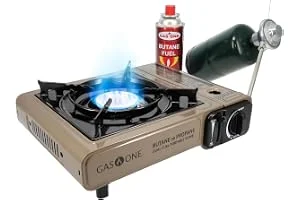
The GS-3400P runs on either an 8-ounce butane canister or a 16.4-ounce propane cylinder and produces 8,000 BTU. That fuel flexibility is useful for camping and emergency outdoor cooking, but it does not make the stove safe indoors; ventilation, fuel connection, cookware stability and local fire rules matter more than the second fuel option.
As an Amazon Associate I earn from qualifying purchases.
View Gas One GS-3400P dual-fuel camping stove on Amazon (paid link) ↗
Confirm the GS-3400P model
ASIN B01HQRD8EO is the Gas One GS-3400P portable dual-fuel camp stove. Gas One lists an 8,000 BTU output, a metal body with enamel-steel drip pan, dimensions of about 13.5 by 11.2 by 4.4 inches and a 3.3-pound stove weight. The brand sells similar GS-3900, GS-4000 and kit listings with different output and contents, so match the model number before comparing prices.
Two fuels provide flexibility, not simultaneous operation
The stove is designed for an 8-ounce butane canister or a 16.4-ounce propane cylinder. Use only one supported fuel path at a time and follow the manual for installing the canister or propane connection. Fuel is not included. Confirm the exact Amazon package includes the propane adapter and carrying case you expect; bundle contents can differ even when the stove body looks identical.
The stove is for outdoor use only
Gas One labels the GS-3400P for outdoor use. Burning propane or butane produces carbon monoxide, an odorless gas that can kill in an enclosed space. Do not use the stove inside a home, vehicle, camper, tent, garage or enclosed patio, even with a door or window open. Place it outdoors on a level, stable, noncombustible surface away from overhangs and flammable material.
8,000 BTU is the control range you are buying
Gas One publishes 8,000 BTU for this model and includes a control knob for flame adjustment. That is useful for everyday camp cooking, reheating and boiling in suitable cookware, but it is not the highest-output model in the line. Wind, air temperature, cookware diameter and starting water temperature all change real boiling time. Use the maker’s windguard as help, not as a reason to cook in unsafe wind.
The pressure-ejection system is a backup, not permission to ignore fuel checks
Gas One says the built-in cartridge ejection system releases the butane canister when it detects irregular gas pressure around 5–7 kg/cm² or higher. Treat that as a protective feature, not a substitute for correct installation, undamaged seals and approved fuel. If you smell gas, turn the stove off, extinguish flame, disconnect the fuel outdoors and follow the manual; do not attempt another ignition until the cause is resolved.
Match the pan to the support
Use cookware that sits securely on the pan supports and stays within the size and weight limits in the stove instructions. An oversized pan can trap heat around the fuel compartment or make the stove unstable. Center the pan before lighting, keep handles away from the flame and never leave the stove unattended. Let the stove cool fully before cleaning or placing it in a case.
Emergency usefulness depends on stored fuel and a safe outdoor location
A dual-fuel stove can be helpful after a power outage when you have a sheltered outdoor cooking area and a compatible fuel supply. Store cylinders according to their labels, away from heat and living spaces, and rotate fuel before it becomes unreliable. The stove does not make indoor emergency cooking safe. A complete plan also includes a working lighter or backup ignition, even though this model has piezo ignition.
Compare GS-3900PB when high output is worth more size and weight
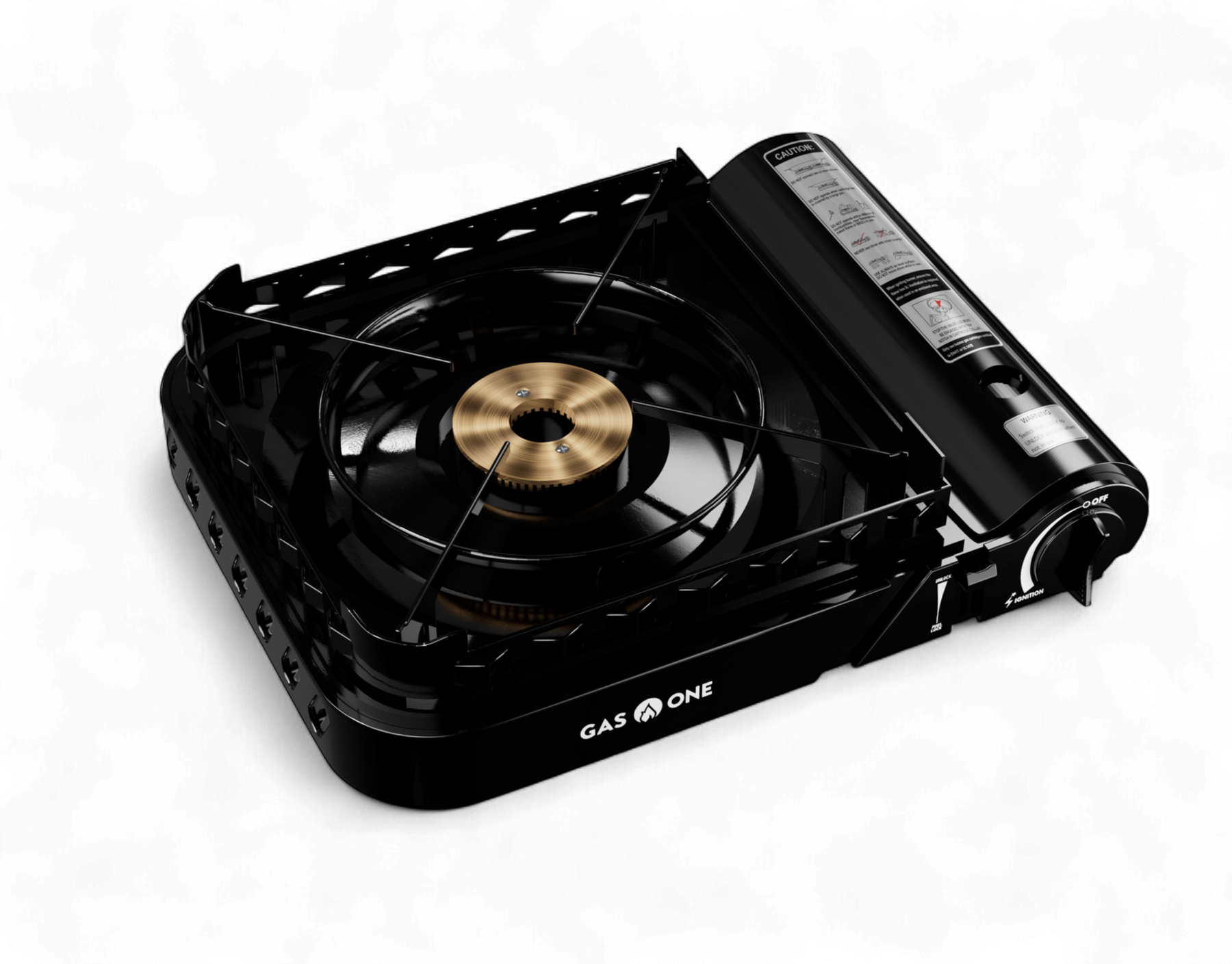
The photographed Gas One GS-3900PB uses the same two fuel formats but increases rated output to 15,000 BTU. Gas One lists it at about 12.9 by 10.9 by 4.5 inches and six pounds. It is better suited to quick boils or higher-heat outdoor cooking, but it uses fuel faster at high output and is nearly twice the listed stove weight. Choose output for the food you actually cook, not the larger number alone.
Compare Coleman for a simpler butane-only setup
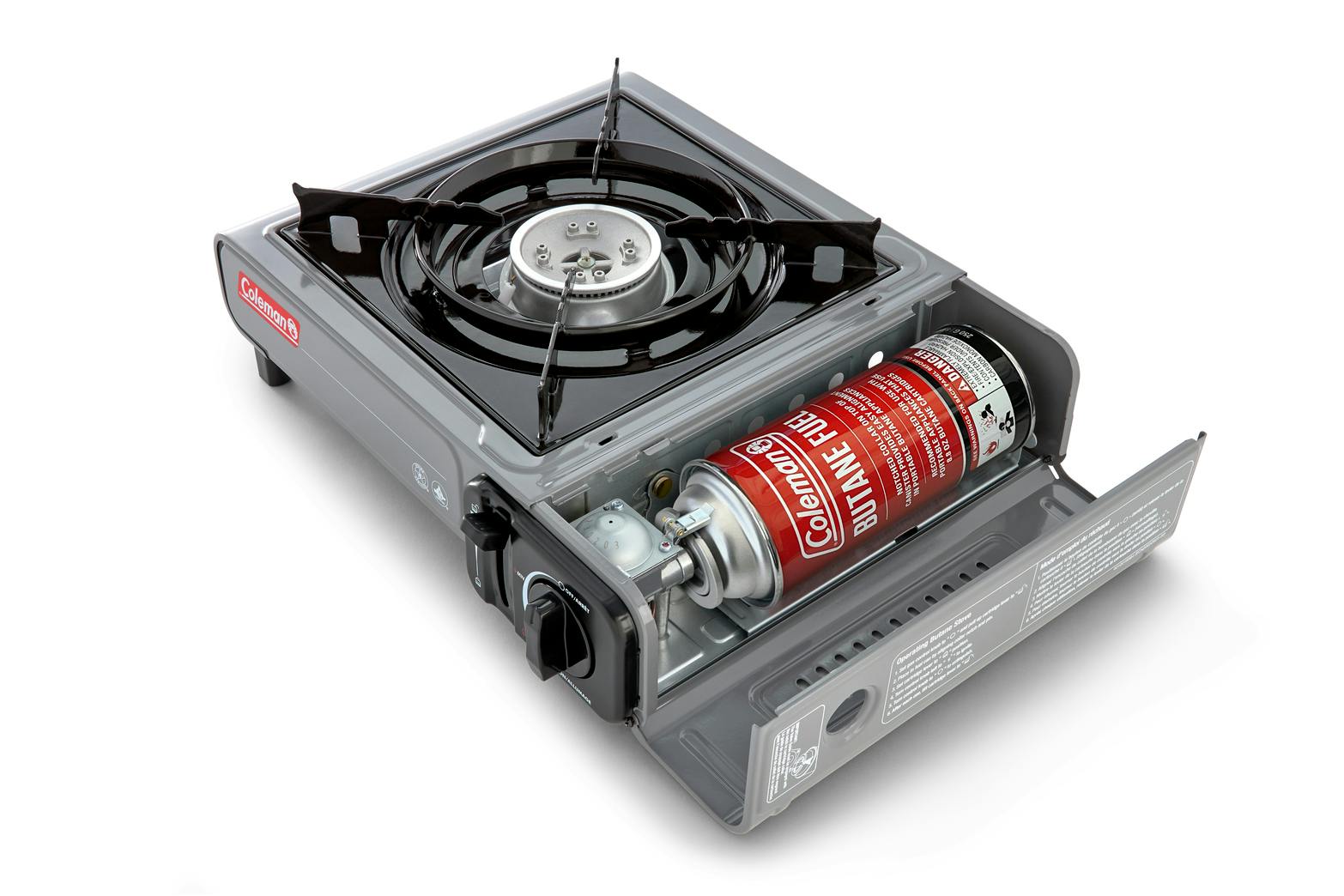
The photographed Coleman Classic one-burner stove uses an 8.8-ounce butane cylinder, produces 7,650 BTU, fits one pan up to ten inches and lists up to 1.25 hours on high. It drops propane compatibility but offers a large base, porcelain-coated grate and included hard case. Choose Coleman when one readily available fuel and a straightforward setup matter more than dual-fuel flexibility.
The buying call
Choose the GS-3400P if you want a compact outdoor stove that can use either common butane canisters or small propane cylinders and 8,000 BTU meets your meals. Choose GS-3900PB for higher output or Coleman for a simple butane-only system. Skip all three if you lack a safe outdoor cooking location. Ryan has not claimed to own or test this stove; this guide uses manufacturer specifications and safety instructions.
Compare the shopping options
Gas One GS-3900PB — 15,000 BTU dual-fuel alternative for higher-heat cooking
Product photo: Gas One product photo
Coleman Classic one-burner — 7,650 BTU butane-only stove with hard case
Product photo: Coleman product photo
Sources and review basis
Researched November 19, 2026. Ryan’s own experience is attributed where supplied. Other judgments are buying advice based on the cited product information, not a hands-on comparison or laboratory test. Prices and availability are checked at the retailer.
- Gas One official GS-3400P specifications, fuel formats, dimensions and safety label
- Amazon listing for Gas One GS-3400P, ASIN B01HQRD8EO (paid link)
- Gas One official GS-3900PB output, dimensions, weight and fuel formats
- Gas One GS-3900PB instruction manual with carbon-monoxide and fuel safety guidance
- Coleman official Classic one-burner butane stove specifications and included case
- Product photo: Gas One GS-3900PB — 15,000 BTU dual-fuel alternative for higher-heat cooking
- Product photo: Coleman Classic one-burner — 7,650 BTU butane-only stove with hard case