Toys, Games & Building Sets / PRODUCT GUIDE
Mattel UNO Teams JDM40 guide: the partner rules that change the endgame
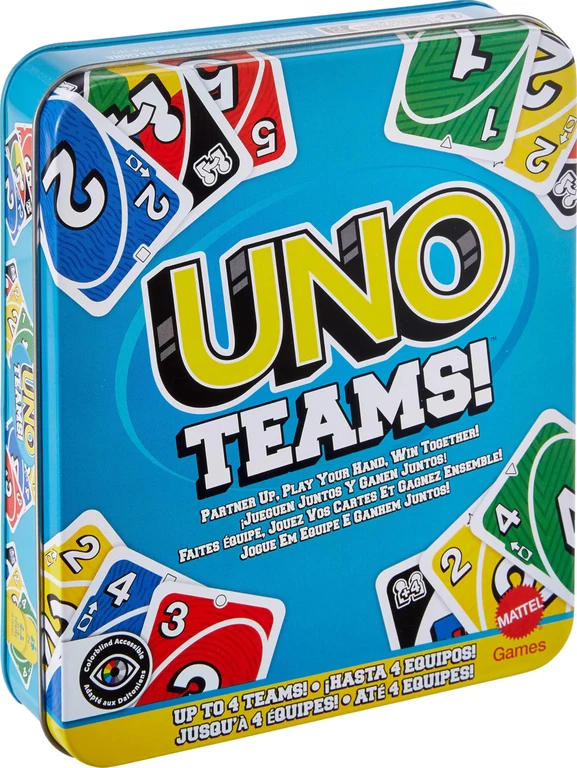
UNO Teams JDM40 builds around two-player partnerships. It suits a four-person family game night where everyone already understands matching cards and wants a new reason to pay attention to the other side of the table.
As an Amazon Associate I earn from qualifying purchases.
View UNO Teams card game on Amazon (paid link) ↗
Start with four players
Mattel’s JDM40 tin advertises up to four teams, and the manufacturer lists 112 cards and an age recommendation of seven and up. Four people make an easy first game: seat partners across from each other to play two against two. If your regular game night has an odd number or you usually play head-to-head, the defining partnership setup will be harder to use. The alternative card games below give you options without rearranging the group into pairs.
Teach the first swap before introducing special cards
Deal seven per player and set up the draw and discard piles as shown in the instruction sheet. Before the first regular turn, each player gives one card to their partner. Have everyone try that exchange with their cards held privately. The same reciprocal exchange can happen later when you play a card bearing the pass symbol. Keep the exchanged cards separate until both partners have picked one so nobody makes their choice based on the card they just received.
Read Wild Team Play before you call a color
Wild Team Play moves the turn directly to your partner and makes your choice of color matter. If your partner cannot make a play, you draw the penalty of two cards. The other team wild splits its four-card penalty across the next player and their partner, with the next player also losing their turn. Put the instructions within reach on the first round, especially if people are used to a single player receiving all four cards in classic UNO.
Explain the late-round split with an example
If one player empties their hand while their partner holds five cards, the partner gives them two and keeps three. If their partner has only one, there is no transfer at that moment and the player who went out sits out. A later draw can bring them back in under Mattel’s rule. Once you see a round get close, give both partners’ hand sizes a glance before trying to close it. You can play your final card at a moment that still leaves your side several turns away from a win.
Use hand size as the clue everyone gets
Mattel allows normal conversation but bars teammates from sharing information about their hands or influencing the choice of wild color. You can still notice visible hand counts and remember the colors that already went around the table. Either partner can handle the one-card UNO call. For a mixed-age group, start with a single round and introduce cumulative scoring only after everyone has seen a team finish.
Try Flip 7 when the group size varies
Flip 7 is a number-card game about taking another card or banking a round. A repeated number can wipe out the round’s points. It makes a useful alternate for a table that wants an easy-to-explain shared game without assigned partners. Choose UNO Teams when the pair dynamic is the reason everyone wants to play.
Try Exploding Kittens when the table wants elimination play
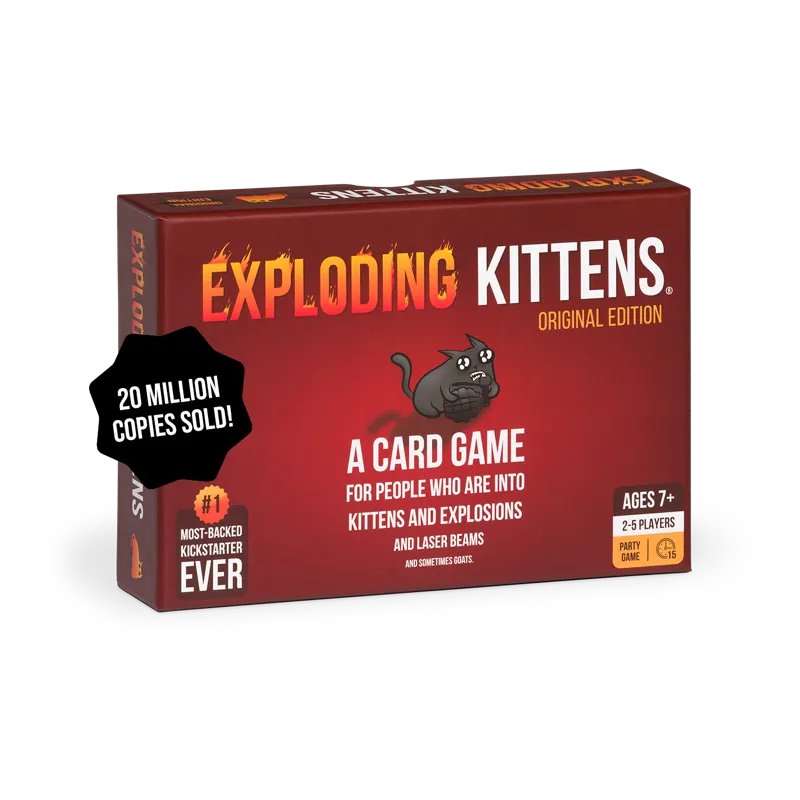
The Original Edition accommodates two to five players and revolves around surviving the draw deck with cards such as Defuse. That changes what the table pays attention to: who can survive another draw instead of who can help a teammate go out. Pick UNO Teams for a foursome that likes coordinated finishes and can learn two extra wild effects. Ryan’s Finds used Mattel’s instructions for this guide and makes no claim of a hands-on playtest.
Compare the shopping options
Flip 7 — individual push-your-luck scoring

Exploding Kittens Original Edition — two-to-five-player draw-and-survive game
Sources and review basis
Researched November 20, 2026. Ryan’s own experience is attributed where supplied. Other judgments are buying advice based on the cited product information, not a hands-on comparison or laboratory test. Prices and availability are checked at the retailer.